Last Updated: 15th June, 2026 | 05:11:18 PM
Play-based Learning Ideas at Home
Play-Based Learning Ideas at Home: The Ultimate Guide to Nurturing Young Minds Through Play

For generations, there has been a lingering misconception that "play" and "learning" are two entirely separate activities. Traditional views often paint learning as something that only happens when a child is sitting quietly at a desk with a pencil and paper, while play is viewed merely as a break from education.
Modern educational psychology heavily refutes this dichotomy. Decades of research in child development demonstrate that for young children, play is the highest form of research. It is the primary mechanism through which they explore their environment, build neurological connections, master emotional regulation, and develop foundational literacy and STEM concepts.
Implementing a structured yet flexible approach to play at home prepares children for the academic milestones they will face in formal education—concepts thoroughly explored in foundational academic guides such as the
By curating an environment rich in intentional play, you aren't just keeping your children occupied; you are systematically building their cognitive frameworks. This comprehensive guide details the science behind play-based learning and offers actionable, high-impact activities you can start doing at home today.
Best
Digital Planners for College Students
Writing Prompts for Middle School
The Science Behind Play-Based Learning
To understand why play is so effective, we must look at how the brain processes experiences. When a child engages in self-directed or lightly guided play, their brain releases dopamine, a neurotransmitter associated with pleasure, motivation, and memory retention.
In formal developmental studies, like those covered in the advanced curriculum of the
Study Tips for High School Students
Active Recall and Spaced Repetition Techniques
Types of Play and Their Cognitive Benefits
Functional Play: Repetitive muscle movements (e.g., rolling a ball, pouring water). Benefit: Develops gross and fine motor skills.
Constructive Play: Manipulating objects to build something (e.g., Legos, cardboard boxes). Benefit: Teaches spatial awareness, structural problem-solving, and goal-directed behavior.
Dramatic/Symbolic Play: Role-playing and pretend scenarios (e.g., playing "doctor" or "kitchen"). Benefit: Enhances language acquisition, empathy, and executive functioning.
Games with Rules: Structured play requiring turn-taking and boundary adherence (e.g., board games, hide-and-seek). Benefit: Builds emotional regulation, sportsmanship, and social negotiation skills.
1. Literacy and Language Play Ideas
Building strong communication skills doesn't require endless worksheets. Early literacy relies on phonemic awareness, vocabulary expansion, and narrative comprehension—all of which can be gamified seamlessly.
The Sticky Note Word Hunt
Write single letters or high-frequency sight words on sticky notes and scatter them across a room or along a hallway. Give your child a specific "target word" or "target sound" to hunt for.
How it teaches: This combines physical movement with visual recognition. For younger toddlers, you can use colors or shapes instead of letters.
The Academic Edge: This physical tracking reinforces spatial tracking skills necessary for reading left-to-right across a page.
Storytelling Prop Boxes
How to Improve Reading Skills Quickly
STEM Activities for Preschoolers
Fill a small container with random household items: a wooden spoon, a mismatched sock, an empty thread spool, and an old key. Have your child draw items out one by one and improvise a story that connects all the items.
How it teaches: This activity rapidly expands descriptive vocabulary and teaches structural narrative components (beginning, middle, and climax).
2. Early Math and STEM Play Ideas
Early mathematics is entirely about patterns, measurement, spatial relationships, and classification. Abstract mathematical formulas become incredibly simple later in life if a child has spent years handling concrete representations of numbers.
Kitchen Chemistry and Volume Play
Transform your kitchen sink or a plastic bin into a laboratory. Provide measuring cups, spoons, funnels, and plastic containers of various shapes and sizes. Fill the space with water or dry rice.
How it teaches: As children pour material back and forth, they discover the concept of conservation of volume—understanding that a tall, narrow cup can hold the exact same amount of liquid as a short, wide bowl.
Advanced Variation: Introduce a simple kitchen scale to teach weight comparisons. Ask questions like: "Which feels heavier: a cup of water or a cup of dry oats?"
[Traditional Worksheets]  <-- Low Engagement, High Stress
       vs.
[Kitchen Volume Play]     <-- High Engagement, Active Neuroplasticity (Dopamine Release)
The Living Room Geometry Obstacle Course
Use painter's tape to tape large geometric shapes (triangles, squares, hexagons) on the floor. Instruct your child to hop from one shape to another based on specific mathematical prompts.
Prompts to try: "Hop onto a shape with three corners!" or "Crawl only along the perimeter of the rectangle!"
How it teaches: It bridges physical, kinesthetic movement with abstract geometric definitions, making terminology like angles, sides, and perimeters second nature.
3. Sensory and Fine Motor Play Ideas
Fine motor control is the physiological precursor to fluent handwriting. If a child's hand muscles are weak, the physical act of writing becomes exhausting, impeding their cognitive capacity to focus on spelling and sentence creation.
Homemade Playdough Excavation
Mix up a quick batch of non-toxic flour and water dough. Bury small plastic toys, coins, or beads deep within a large ball of dough. Provide your child with child-safe tools like plastic tweezers, popsicle sticks, or dull butter knives to extract the items.
How it teaches: Pinching, squeezing, cutting, and pulling apart dough strengthens the intrinsic muscles of the hand and improves the pincer grasp needed to hold writing utensils properly.
DIY Sensory Bins
Fill a shallow storage container with a base material like dried beans, lentils, or dry pasta. Mix in small thematic elements (e.g., small plastic insects for a "nature bin" or seashells for an "ocean bin").
How it teaches: Sensory play helps desensitize tactile defensiveness, regulates anxious sensory systems, and encourages cognitive classification as children sort elements by color, size, or texture.
4. Creative and Dramatic Play (Role-Play)
When a child pretends to be someone else, they are doing highly sophisticated mental work. They must hold an abstract set of rules in their mind regarding how that character behaves, filters out non-relevant behaviors, and responds to dynamic challenges.
The Household Doctor / Veterinary Clinic
Set up a stuffed animal hospital using bandages, blankets, empty spray bottles, and plastic syringes (without needles). Allow your child to act as the head medical professional.
How it teaches: This builds deep empathy and emotional intelligence. It also de-escalates personal anxieties children might have about visiting their own healthcare professionals, transforming scary clinical settings into familiar, navigable scenarios.
The Cardboard Box Metropolis
Never throw away large appliance boxes. A massive cardboard box can become a castle, a spaceship, a grocery storefront, or a sub-surface cave system with just a pack of markers and a pair of scissors.
How it teaches: It fosters divergence in thinking—the core of creative problem-solving. A box isn't just a box; it represents whatever structural framework their imagination dictates.
The Role of the Parent: Scaffolding vs. Directing
A crucial element of successful play-based learning is the exact nature of parental involvement. Parents must avoid the temptation to completely take over and control the play scenario. If an activity becomes overly regulated by adults, it ceases to be "play" and loses its cognitive benefits.
Instead, practice scaffolding—a psychological concept deeply integrated into child assessment metrics, such as those found within the
| Instead of Saying... | Try Saying... |
| "No, that block doesn't go there; it will fall over." | "I notice your tower is leaning a bit to the left. What could we add to the bottom to balance it?" |
| "Let me draw the circle for you." | "Let's track the outline of this round plate together with our fingers first!" |
| "That's not how a doctor talks to a patient." | "Oh dear, my teddy bear says he feels a bit nervous about getting a shot. How can the doctor comfort him?" |
Best educational Apps for Adults
Online Tutoring Jobs for Teens
Conclusion: Setting Up Your Home for Success
You don't need an expensive playroom or a mountain of plastic electronic toys to cultivate a thriving play-based learning ecosystem. In fact, minimalist spaces with versatile, open-ended items (often called "loose parts") lead to deeper focus and longer independent play spans.
Dedicate small baskets or low shelves to open-ended resources:
Nature collections (pinecones, smooth stones, seed pods)
Structural components (blocks, cardboard tubes, cups)
Fabric segments (old scarves, sheets, large clothes pins for fort-building)
By intentionally facilitating these activities, you build a foundation of intellectual curiosity that will carry your child throughout their academic life. For parents and educators looking to dive deeper into the professional methodologies governing these developmental milestones, tracking academic standards across major educational institutions remains highly valuable.
Explore resource hubs like
Homeschooling Tips for Working Parents
Microlearning Courses for Professionals
AI-powered lesson plan generators
Best AI tools for Teachers / Students
Google Workspace for Education Tutorials
Related Posts

Financial Literacy for High Schoolers...
15th June, 2026
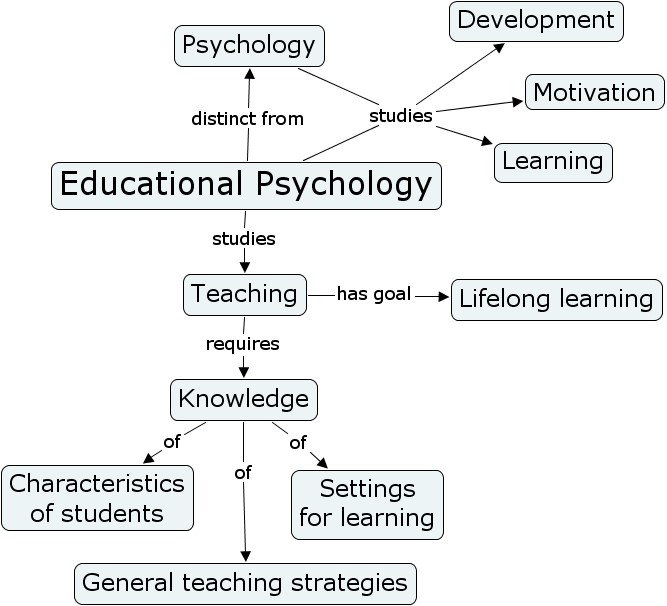
Educational Psychology Strategies...
15th June, 2026
 examples.png)
Universal Design for Learning (UDL) examples...
15th June, 2026
Social Emotional Learning (SEL) Activities...
15th June, 2026
Sensory Activities for Toddlers...
15th June, 2026
Educational Podcasts for Kids...
15th June, 2026
Books for Early Readers...
15th June, 2026
STEM Activities for Preschoolers...
15th June, 2026
Best Digital Planners for College Students...
15th June, 2026
Writing Prompts for Middle School...
15th June, 2026
Study Tips for High School Students...
15th June, 2026
How to Improve Reading Skills Quickly...
15th June, 2026
Categories
Blog Posts





Breaking News
We usually sends BREAKING News to students of National Open University, NOUN. Not to miss any of our latest updates, enter your email here