Last Updated: 15th June, 2026 | 03:07:34 PM
AI-powered lesson plan generators
The Future of Teaching: A Comprehensive Guide to AI-Powered Lesson Plan Generators

For decades, educators have wrestled with a universal truth: teaching is a profoundly rewarding profession, but the administrative workload can be crushing. Between grading, student counseling, continuous professional development, and actual classroom instruction, the time left to craft engaging, standardized, and differentiated lesson plans is often minimal.
Enter the era of Artificial Intelligence. Over the past few years, generative AI has transitioned from a Silicon Valley buzzword to a practical, everyday tool for educators. At the forefront of this educational revolution are AI-powered lesson plan generators.
In this comprehensive guide, we will explore what these tools are, how they are transforming the educational landscape, their key benefits, and how teachers can integrate them into their workflow to reclaim their time and sanity.
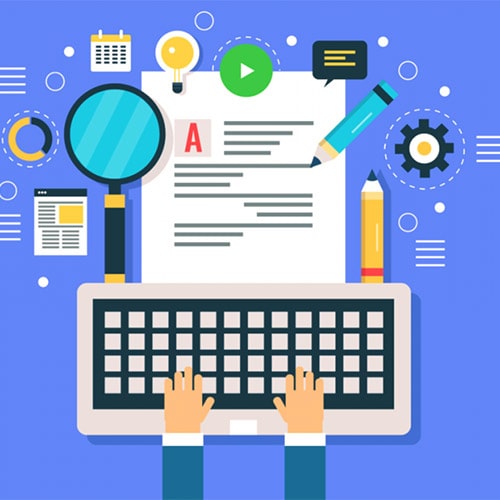
http://googleusercontent.com/image_generation_content/2 Caption: A modern educator leveraging AI technology to seamlessly structure, visualize, and generate comprehensive classroom lesson plans.
What is an AI-Powered Lesson Plan Generator?
An AI lesson plan generator is a software application driven by Large Language Models (LLMs)—the same technology behind tools like ChatGPT and Google Gemini. These generators are trained on vast datasets of educational content, pedagogy, curriculum standards, and instructional design frameworks.
Instead of starting from a blank Word document or a dusty textbook, a teacher simply inputs a set of parameters into the AI. These parameters might include:
The subject and specific topic (e.g., "The Water Cycle" or "Causes of the Nigerian Civil War").
The grade level or age group.
The desired duration of the lesson.
Specific learning objectives or curriculum standards.
The learning styles or special needs of the students.
Within seconds, the AI synthesizes this information and outputs a structured lesson plan complete with a hook, direct instruction materials, guided practice activities, independent assignments, and assessment rubrics.
The Game-Changing Benefits for Educators
Why are teachers worldwide flocking to these AI platforms? The advantages go far beyond simple convenience.
1. Unprecedented Time Savings
The most immediate benefit is time. A detailed lesson plan that once took an hour or more to research, draft, and format can now be generated in under a minute. This allows educators to shift their focus from clerical preparation to active instruction and student engagement. By optimizing administrative tasks, educators have more energy to dedicate to their students' real-time needs. (If you are balancing your own studies with teaching, finding ways to save time is crucial—check out
2. Deep Personalization and Differentiation
No two classrooms are the same, and no two students learn exactly alike. Modifying a standard lesson plan for advanced learners, English-as-a-second-language (ESL) students, or students with Individualized Education Programs (IEPs) is traditionally exhausting. AI generators excel at differentiation. A teacher can prompt the AI to take a standard 10th-grade biology lesson and say, "Rewrite the reading passage for a 7th-grade reading level, and add tactile activities for kinesthetic learners." #### 3. Overcoming "Educator's Block" Just as writers face writer's block, teachers can experience creative fatigue. When you are teaching the same introductory algebra concepts for the fifth year in a row, finding a fresh, engaging way to introduce the topic can be difficult. AI serves as a tireless brainstorming partner, suggesting unique project ideas, interactive games, or real-world connections that might not have occurred to the teacher.
4. Instant Rubric and Assessment Generation
Beyond the instructional material, AI tools are phenomenal at reverse-engineering assessments. If a teacher generates a lesson on essay structure, the AI can instantly generate a matching 5-point grading rubric and a 10-question multiple-choice quiz based exactly on the material covered in the generated lesson. (For students looking for past questions and assessment guides to understand how they are graded, visiting the
How to Effectively Use AI for Lesson Planning (Best Practices)
AI is a tool, not a replacement for human pedagogy. To get the best results, educators must learn how to "pilot" the AI effectively.
1. Master Prompt Engineering: The quality of the AI's output depends entirely on the quality of the teacher's input. Vague prompts yield generic results.
Poor Prompt: "Make a lesson plan about fractions."
Great Prompt: "Create a 45-minute lesson plan introducing basic fractions to 4th graders. Include a 5-minute hands-on hook using pizza slices as a metaphor, 15 minutes of direct instruction, a collaborative group activity, and a 3-question exit ticket. Align with Common Core math standards."
2. The Human-in-the-Loop Model: Never take an AI-generated lesson plan straight to the classroom without reviewing it. AI can "hallucinate" or provide factually incorrect information. It might also suggest an activity that requires materials you don't have, or use language that doesn't fit your local cultural context. Treat the AI's output as a first draft. You are the editor-in-chief.
3. Combine AI with Localized Resources:
While AI has broad knowledge, it may lack specific local context. Blend AI-generated structures with local textbooks, cultural references, and institutional guidelines. For instance, university instructors facilitating distance learning can combine AI course structuring with official
Addressing the Challenges and Ethical Concerns
As with any disruptive technology, AI lesson planning comes with valid concerns that the educational community must address.
De-skilling of New Teachers: There is a worry that if new educators rely too heavily on AI to write their plans, they may never develop the underlying pedagogical muscles required to understand why a lesson works. AI should be used to augment a teacher's knowledge, not bypass the learning process.
Data Privacy: Teachers must be cautious not to input sensitive student data (like names, grades, or specific behavioral issues) into public AI models, as this can violate privacy regulations.
The Homogenization of Education: If everyone uses the same AI to generate lessons, there is a risk that education could become overly standardized and lose the unique, quirky, human touch that memorable teachers bring to the classroom.
The Future of AI in Education
The current generation of AI lesson planners is just the beginning. In the near future, we will likely see AI systems integrated directly into Learning Management Systems (LMS). These systems will analyze real-time student performance data on digital quizzes and automatically generate adaptive lesson plans for the next day, dynamically targeting the specific concepts the class struggled with the most.
Furthermore, multi-modal AI will allow teachers to generate not just text-based plans, but accompanying slide decks, custom instructional videos, and interactive simulations all from a single prompt.
Conclusion
AI-powered lesson plan generators are not here to replace teachers; they are here to rescue them from the burden of administrative burnout. By acting as highly efficient, wildly creative digital teaching assistants, these tools allow educators to get back to doing what they do best: building relationships with students, inspiring curiosity, and facilitating real human connection in the classroom.
As the digital landscape of education continues to evolve, staying informed and adopting these tools early will be key to thriving as an educator. Stay connected with communities that support academic excellence and technological integration by visiting platforms like
You might also be Interest with these Scholarships
How
To Get An International Scholarship
Australian
Institute Research Grant
International
Scholarship for Excellence
The
Marten Bequest Travelling Scholarship
Study
a Bachelor’s in the USA Scholarship
Related Posts

Financial Literacy for High Schoolers...
15th June, 2026
Educational Psychology Strategies...
15th June, 2026
 examples.png)
Universal Design for Learning (UDL) examples...
15th June, 2026
Social Emotional Learning (SEL) Activities...
15th June, 2026

Sensory Activities for Toddlers...
15th June, 2026

Educational Podcasts for Kids...
15th June, 2026
Books for Early Readers...
15th June, 2026

Play-based Learning Ideas at Home...
15th June, 2026
STEM Activities for Preschoolers...
15th June, 2026
Best Digital Planners for College Students...
15th June, 2026
Writing Prompts for Middle School...
15th June, 2026
Study Tips for High School Students...
15th June, 2026
Categories
Blog Posts


Breaking News
We usually sends BREAKING News to students of National Open University, NOUN. Not to miss any of our latest updates, enter your email here