Last Updated: 15th June, 2026 | 06:22:35 PM
Educational Psychology Strategies
Educational Psychology Strategies: Unlocking the Science of Learning

Educational psychology is the bridge between how we think and how we learn. By understanding the cognitive and emotional processes that drive student success, educators and students alike can transform the learning experience from a chore into a highly efficient process.
Whether you are a student preparing for exams or a teacher looking to engage a classroom, applying these proven psychological strategies can significantly improve retention and academic performance.
Homeschooling
Tips for Working Parents
Microlearning Courses for Professionals
1. Cognitive Load Theory: Don't Overload the Brain
The human brain has a limited capacity for processing new information in the short term. This is known as working memory. Cognitive Load Theory suggests that learning is most effective when the "load" on working memory is managed.
Chunking: Break large pieces of information into smaller, manageable units. Instead of memorizing a 10-digit number, remember it in three parts.
The Modality Effect: Use both visual and auditory channels. A diagram explained by a voice-over is often better than a diagram with a massive paragraph of text next to it.
For more resources on academic success and student management, check out the latest updates on
2. Metacognition: Learning How to Learn
Metacognition is "thinking about thinking." It involves students monitoring their own understanding and adjusting their strategies accordingly.
Self-Questioning: Encourage students to ask themselves, "Do I actually understand this concept, or am I just familiar with the words?"
Reflection Journals: Writing down what was learned at the end of the day helps solidify memory and identifies gaps in knowledge.
3. The Power of Active Learning
Passively reading a textbook is one of the least effective ways to learn. Educational psychology champions Active Learning, where the student is physically or mentally engaged with the material.
Active Recall: Test yourself frequently. Instead of re-reading notes, close the book and try to write down everything you remember.
Spaced Repetition: Reviewing material over increasing intervals (1 day, 3 days, 1 week, 1 month) is far superior to "cramming" for a single night.
AI-powered lesson plan generators
4. Motivation and Self-Efficacy
A student’s belief in their own ability to succeed—known as Self-Efficacy—is one of the strongest predictors of academic achievement.
Growth Mindset: Based on Carol Dweck’s research, teaching students that intelligence can be developed through effort (rather than being a fixed trait) leads to greater resilience.
Intrinsic vs. Extrinsic Rewards: While grades (extrinsic) matter, fostering a genuine curiosity (intrinsic) about the subject ensures long-term engagement.
Interactive Study Habits Explorer
How effective are your current study strategies? Use this interactive tool to see how different psychological approaches impact your predicted retention over time.
Conclusion: Bridging the Gap
Applying educational psychology isn't just for researchers; it’s a practical toolkit for everyday success. By managing cognitive load, fostering metacognition, and leaning into active learning, students can achieve better results with less stress.
If you're looking for more specific guides on navigating university life or finding the right tools for your degree, explore the comprehensive guides at
Cognitive Load Theory (CLT);
Cognitive Load Theory (CLT), developed by John Sweller in the late 1980s, is built on a simple premise: our working memory has a strict speed limit and storage limit, while our long-term memory is virtually infinite.
When studying complex fields like medicine or engineering, students are frequently pushed past this mental speed limit. If the incoming information exceeds the working memory's capacity, a "cognitive overload" occurs, and learning completely stalls.
Gamified Learning Platforms for Kids
Best Online High School Programs

The Three Types of Cognitive Load
To effectively manage learning, CLT breaks mental effort into three distinct categories. The goal of any educator or student is to minimize the first, manage the second, and optimize the third.
1. Intrinsic Load (The Inherent Difficulty)
This is the baseline difficulty of the topic itself. It is dictated by "element interactivity"—how many different pieces of information must be processed simultaneously for the concept to make sense.
In Engineering: Learning the basic formula for stress ($\sigma = \frac{P}{A}$) has low intrinsic load. However, analyzing a dynamic 3D structural truss where every force impacts every other member has high intrinsic load.
In Medicine: Memorizing the name of a bone has low intrinsic load. Understanding the renin-angiotensin-aldosterone system (RAAS), where blood pressure drops trigger a cascade of hormonal interactions across the kidneys, liver, and lungs, carries a massive intrinsic load.
How to Improve Reading Skills Quickly
2. Extraneous Load (The Bad Distractions)
This is mental effort wasted on poorly designed learning materials, confusing instructions, or disorganized environments. It contributes absolutely nothing to actual learning.
In Engineering: A textbook forces a student to constantly flip back and forth between a circuit schematic on page 12 and the explanatory text on page 15. The mental energy used to remember the diagram while reading the text is pure extraneous load (known as the split-attention effect).
In Medicine: A lecture slide on cardiovascular pathology contains a massive wall of text, a low-res image, and an unrelated chart all crammed together while the professor talks about something slightly different.
3. Germane Load (The Good Work)
This is the "productive" cognitive load. It is the mental energy used by the brain to construct schemas—mental blueprints that organize separate pieces of data into a single coherent concept. Once a schema is built, it can be pulled from long-term memory as a single unit, effectively bypassing the working memory bottleneck.
Managing CLT in Medicine and Engineering
Because medical and engineering students face an overwhelming volume of data, traditional learning methods often fail. Here is how CLT principles restructure learning in these fields:
Medicine: Scaffolded Clinical Simulation
A first-year medical student cannot be thrown into a chaotic Emergency Room to learn how to manage an acute stroke; the extraneous and intrinsic loads would cause immediate panic and zero retention.
Instead, educators use scaffolding—gradually increasing complexity:
Engineering: The "Worked Example" Effect
When engineering students are given a highly complex, unsolved problem right out of the gate, they resort to "means-ends analysis"—a fancy term for trial-and-error guessing. This completely exhausts working memory.
CLT solves this using Worked Examples and the Fading Effect:
| Learning Stage | Strategy | How it Reduces Load |
| Novice | Full Worked Example | The student is given a complex thermodynamics problem alongside its step-by-step, fully calculated solution. Working memory is freed from calculation and can focus entirely on why each step was taken. |
| Intermediate | Partially Completed Problem | The student is given a similar problem where the first 4 steps are filled out, but they must solve the final 2 steps (the completion strategy). |
| Advanced | Independent Problem Solving | Once the schemas for the steps are solidly built and automated, the student is given a blank problem. They can now solve it without overloading. |
The Takeaway
If you are struggling to comprehend a dense medical or engineering concept, you likely haven't failed—your working memory has simply been overloaded.
To fix it: strip away the extraneous noise, find a fully solved example to study first, and break the complex system down into highly interactive pairs until the foundational pieces feel automatic.
Sensory Activities for Toddlers
Play-based Learning Ideas at Home
How To Create A Spaced Repetition Study Schedule For A College Semester Using Digital Tools.
To get the most out of your college semester without burning out, you need to move away from cramming and transition to Spaced Repetition. This technique works by reviewing material just as you are about to forget it, pushing the information deeper into your long-term memory.
Creating a system manually can quickly become a scheduling nightmare. Fortunately, combining a digital workspace (like Notion) with algorithmic flashcards (like Anki) or a dedicated calendar makes managing a spaced repetition schedule incredibly simple.
Here is a step-by-step blueprint to build a bulletproof spaced repetition system for your semester.
Step 1: Choose Your Digital Ecosystem
Depending on how much control you want over your schedule, choose one of these two main digital setups:
The Automated Method (Anki / RemNote): You input your lecture notes or flashcards, and a built-in algorithm automatically calculates exactly when you need to review them based on how well you remember them.
The Structured Dashboard Method (Notion / Google Sheets): You build a custom "Spaced Repetition Tracker" using a database formula or standard intervals. This is ideal if you are tracking entire lecture topics, essays, or chapters rather than individual facts.
Step 2: Set Up the "Retrospective Timetable" in Notion or Sheets
A traditional timetable tells you what to study on a specific day of the week. A Retrospective Timetable tells you when to review a topic based on when you last saw it.
To set this up manually in Notion or Google Sheets, create a master tracking database with the following structure:
The Layout
Create a table with columns for Subject, Topic, Date Taught, and the target intervals: Review 1 (1 Day), Review 2 (3 Days), Review 3 (7 Days), and Review 4 (14 Days).
The Code (For Automation)
If you are using Notion, you can automate this by setting up a Formula column for your next review date. Use a formula that checks your confidence level and pushes out the date.
Alternatively, if you are building this in Google Sheets, copy this layout and use simple date additions:
| Subject | Topic Name | Date Taught | Review 1 (Date + 1) | Review 2 (Date + 4) | Review 3 (Date + 11) | Status / Rating |
| CHM 101 | Acid-Base Titration | June 15 | June 16 | June 19 | June 26 | 🔴 Struggling |
| MTH 202 | Linear Transformations | June 15 | June 16 | June 19 | June 26 | 🟢 Mastered |
Color Coding (The Traffic Light System)
Whenever you finish a review session, look at the topic and color-code your rating cell:
🔴 Red: Completely forgot. (Reset the timer—review again tomorrow).
🟡 Yellow: Remembered with significant effort. (Keep the current interval).
🟢 Green: Remembered quickly and easily. (Feel free to double the next gap time).
Step 3: Implement the "Feynman Technique" Checklist
A spaced repetition schedule is only as good as the review itself. Doing passive reading on your review days will trigger cognitive overload and yield poor results.
Instead, turn your review dates into Active Recall sessions:
Step 4: Sync to Your Central Digital Planner
To make sure your review sessions don't get lost in the noise of project deadlines, club meetings, and social events, you need to pull them into your daily schedule.
If you're designing a comprehensive workspace for your university courses, you can easily integrate your spaced repetition tasks directly alongside your assignment trackers. Having a clear, unified view prevents your daily calendar from becoming overwhelmed by competing priorities.
Google Calendar / Outlook: Block out a recurring 45-minute window every single morning labeled "Spaced Repetition Review Pool".
When that block arrives, you don't guess what to study. You simply open your tracking database, filter for items where
Next Review Dateis on or before today, and clear that specific batch.
Pro-Tips for Long-Term Semester Success
Lower the Friction: Keep your note-taking tool and your testing tool connected. If you use Notion, you can type toggle lists (
/toggle) to hide answers while you take notes during a lecture, creating instant flashcards for your review days.Don't Let the Queue Pile Up: If you skip three days of spaced repetition, your digital queue will overflow, causing severe cognitive fatigue. If you get overwhelmed, pause new inputs and spend two days simply clearing out old reviews until the queue stabilizes.
By taking 10 minutes to map your course syllabus into a retrospective database at the start of the semester, you completely eliminate the need to cram when exam season arrives.
Best Digital Planners for College Students
Writing Prompts for Middle School
Study Tips for High School Students
Active Recall and Spaced Repetition Techniques
Best educational Apps for Adults
Online Tutoring Jobs for Teens
Related Posts

Financial Literacy for High Schoolers...
15th June, 2026
 examples.png)
Universal Design for Learning (UDL) examples...
15th June, 2026
Social Emotional Learning (SEL) Activities...
15th June, 2026

Sensory Activities for Toddlers...
15th June, 2026

Educational Podcasts for Kids...
15th June, 2026

Books for Early Readers...
15th June, 2026

Play-based Learning Ideas at Home...
15th June, 2026
STEM Activities for Preschoolers...
15th June, 2026
Best Digital Planners for College Students...
15th June, 2026
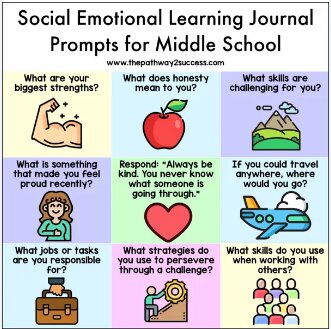
Writing Prompts for Middle School...
15th June, 2026

Study Tips for High School Students...
15th June, 2026

How to Improve Reading Skills Quickly...
15th June, 2026
Categories
Blog Posts






Breaking News
We usually sends BREAKING News to students of National Open University, NOUN. Not to miss any of our latest updates, enter your email here