Last Updated: 15th June, 2026 | 05:02:48 PM
STEM Activities for Preschoolers
Inspiring the Next Generation: Fun and Easy STEM Activities for Preschoolers

In the early years of development, a child’s brain is like a sponge, rapidly absorbing information from the environment. Long before they step into a formal physics or calculus classroom, young learners are natural-born scientists. Every time a toddler drops a spoon from a high chair or stacks blocks to see how high they can go, they are experimenting with gravity, balance, and spatial awareness.
Introducing STEM (Science, Technology, Engineering, and Math) concepts during the preschool years doesn’t require expensive laboratory equipment or complex formulas. Instead, it relies on harnessing their innate curiosity through hands-on, play-based activities. By engaging early learners in sensory-rich environments, educators and parents can fundamentally alter a child's academic trajectory.
Research highlights the critical role that specialized resources play in early education, as detailed in this extensive study on the
Best
Digital Planners for College Students
Writing Prompts for Middle School
Why STEM Matters in Early Childhood Education
STEM education is more than just preparing children for tech-heavy careers; it is a foundational approach to how individuals process information. Engaging preschoolers in STEM activities fosters:
Critical Thinking: Learning how to ask questions, hypothesize, test ideas, and analyze results.
Problem-Solving Skills: Developing resilience when a design fails and iterating a new strategy.
Fine and Gross Motor Skills: Manipulating tools, pouring liquids, and building structures.
Language Development: Learning descriptive words like sink, float, solid, liquid, heavy, light, gravity, and velocity.
1. Science Activities: Nurturing the Mini-Explorer
Science for preschoolers is entirely about observation and sensory exploration. Young children learn best when they can touch, smell, see, and interact with the physical world around them.
Sink or Float Experiment
This classic experiment introduces the foundational physics concept of density and buoyancy.
Materials Needed: A large clear plastic bin filled with water; a variety of household objects (plastic toys, rocks, leaves, coins, corks, spoons).
How to Do It: 1. Gather the objects and have your preschooler sort them.
2. Before dropping an object into the water, ask the golden scientific question: "Do you think this will sink or float?"
3. Drop the items in one by one and observe.
4. Group the objects into two piles: "Sinkers" and "Floaters."
Magic Milk (Surface Tension)
Expose young minds to chemical reactions using basic kitchen staples.
Materials Needed: A shallow dish, whole milk, liquid food coloring, cotton swabs, and dish soap.
How to Do It: 1. Pour enough milk into the dish to cover the bottom.
2. Add a few drops of different food colors near the center.
3. Dip a cotton swab into liquid dish soap, then touch it gently to the center of the milk.
4. Watch in amazement as the colors instantly burst and swirl away from the swab, demonstrating how soap breaks down surface tension.
2. Technology Activities: Thinking Beyond Screens
Technology in preschool isn't about giving a child a tablet or a smartphone. In early childhood education, technology refers to understanding how tools work and learning computational thinking (sequencing and patterns).
Unplugged Coding Grid
You can teach the fundamentals of computer coding without a single screen. This builds the concept of algorithms—a step-by-step set of rules.
Materials Needed: Painter's tape (to make a grid on the floor), a favorite stuffed animal, and a "prize" (like a toy or a book).
How to Do It:
Create a 4x4 square grid on the floor using painter's tape. Place the stuffed animal at one corner and the prize at the opposite corner.
Draw arrows on pieces of paper (Forward, Backward, Left, Right).
Have your child act as the "programmer" by laying out a sequence of arrows to direct you (the "robot") on how to move through the grid to reach the prize.
Best educational Apps for Adults
Tool Exploration Station
Using real-world mechanical tools teaches children how human innovation solves daily problems. Create a supervised tray containing magnifying glasses, tweezers, flashlights, non-sharp gears, and magnets. Allow children to discover which tool is best suited for picking up tiny objects, finding hidden metal items, or looking closely at a leaf.
3. Engineering Activities: Designing and Building
Preschoolers love to construct (and destruct!). Engineering projects build spatial reasoning, structural coordination, and an early understanding of physics principles.
The Index Card / Cup Tower Challenge
Instead of standard building blocks, introducing non-traditional materials challenges a child’s understanding of balance and weight distribution.
Materials Needed: A pack of index cards and a stack of paper or plastic cups.
How to Do It:
Show your child how to place cups upside down and lay an index card flat across the top.
Challenge them to alternate layers: cups, index card, cups, index card.
Encourage them to explore structural integrity: "What happens if we put two cups on the bottom instead of one?"
Foil Boats
Introduce engineering design loops—building, testing, modifying, and re-testing.
Materials Needed: Sheets of aluminum foil and plastic pennies or small blocks.
How to Do It:
Give your child a square piece of foil and ask them to mold it into a shape that can float on water.
Once the boat is floating, slowly add pennies one by one.
Count how many pennies the boat can hold before it sinks. If it sinks quickly, encourage them to redesign the boat with wider bottoms or higher sides.
4. Mathematics Activities: Making Numbers Meaningful
Early math should always move from the concrete (physical objects) to the abstract (written numbers). Avoid worksheets and focus on patterns, geometry, and sorting.
Best AI tools for Teachers / Students
Sticky Note Number Match
Materials Needed: Sticky notes, a marker, and a collection of small counting items (buttons, cereal pieces, or beads).
How to Do It:
Write numbers 1 through 5 (or 10) on large sticky notes and place them on a wall or table.
Have your child look at the number, identify it, and count out the corresponding number of buttons to place underneath or on top of the note.
This builds "one-to-one correspondence"—the understanding that a number symbol represents a specific quantity of physical objects.
Nature Patterning Walk
Math is completely woven into nature. Take a walk outside around your yard or a local park. Collect leaves, twigs, pinecones, and stones. Once back, guide your child to create visual patterns:
Leaf, Twig, Leaf, Twig (AB Pattern)
Stone, Stone, Pinecone, Stone, Stone, Pinecone (AAB Pattern)
Google Workspace for Education Tutorials
Summary Table: Quick STEM Guide for Parents & Teachers
| Activity Category | Activity Name | Core STEM Concept | Materials Needed |
| Science | Sink or Float | Buoyancy & Density | Water bin, household objects |
| Science | Magic Milk | Surface Tension | Milk, food color, dish soap |
| Technology | Unplugged Coding Grid | Algorithms & Sequencing | Floor tape, stuffed animal |
| Engineering | Foil Boats | Structural Redesign | Aluminum foil, pennies, water |
| Mathematics | Sticky Note Match | One-to-One Correspondence | Sticky notes, small counters |
Conclusion: Emphasize the Process, Not the Result
When facilitating STEM activities for young children, the ultimate goal isn't to get the "correct" answer or build a flawless structure. The magic happens during the struggle, the observation, and the conversation. If a tower collapses or a foil boat sinks instantly, celebrate it as a successful step in the scientific method. Ask probing questions like: "Why do you think that happened?" or "What can we try next?" By keeping early STEM experiences playful, interactive, and heavy on instructional materials, you lay down a robust infrastructure for a lifetime of creative thinking and joyful learning.
Microlearning Courses for Professionals
AI-powered lesson plan generators
How to Improve Reading Skills Quickly
Related Posts

Financial Literacy for High Schoolers...
15th June, 2026
Educational Psychology Strategies...
15th June, 2026
 examples.png)
Universal Design for Learning (UDL) examples...
15th June, 2026
Social Emotional Learning (SEL) Activities...
15th June, 2026
Sensory Activities for Toddlers...
15th June, 2026
Educational Podcasts for Kids...
15th June, 2026
Books for Early Readers...
15th June, 2026
Play-based Learning Ideas at Home...
15th June, 2026
Best Digital Planners for College Students...
15th June, 2026
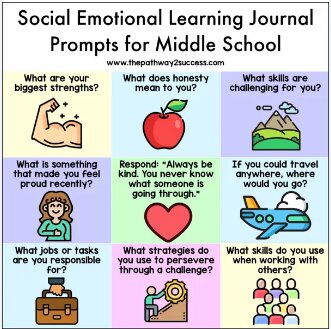
Writing Prompts for Middle School...
15th June, 2026
Study Tips for High School Students...
15th June, 2026
How to Improve Reading Skills Quickly...
15th June, 2026
Categories
Blog Posts






Breaking News
We usually sends BREAKING News to students of National Open University, NOUN. Not to miss any of our latest updates, enter your email here