Last Updated: 15th June, 2026 | 05:30:55 PM
Social Emotional Learning (SEL) Activities
Unlocking Student Potential: The Ultimate Guide to Social Emotional Learning (SEL) Activities

In modern education, academic excellence is no longer the sole metric of a student's success. As classrooms become more diverse and the modern world introduces complex social challenges, educators and parents are recognizing that emotional intelligence is just as crucial as cognitive intellect. This realization has brought Social Emotional Learning (SEL) to the forefront of educational development.
Implementing SEL activities in classrooms or at home helps students manage their emotions, build meaningful relationships, and make responsible choices. For educators diving into pedagogy or preparing comprehensive coursework, understanding these social frameworks is essential—a concept deeply explored in research regarding
This comprehensive guide breaks down the core pillars of SEL and provides actionable, engaging activities designed for various age groups to foster an empathetic and resilient learning environment.
Sensory
Activities for Toddlers
What is Social Emotional Learning (SEL)?
Social Emotional Learning is the framework through which individuals acquire and apply the knowledge, skills, and attitudes necessary to understand and manage emotions, set and achieve positive goals, feel and show empathy for others, establish and maintain positive relationships, and make responsible decisions.
According to the Collaborative for Academic, Social, and Emotional Learning (CASEL), SEL is structured around five core competencies:
Self-Awareness: Recognizing one’s own emotions, values, strengths, and limitations.
Self-Management: Regulating one’s emotions, thoughts, and behaviors in different situations.
Social Awareness: Understanding and empathizing with others from diverse backgrounds and cultures.
Relationship Skills: Establishing and maintaining healthy, supportive connections.
Responsible Decision-Making: Making caring and constructive choices about personal behavior and social interactions.
The Benefits of SEL in the Classroom
Integrating SEL activities into the daily routine yields measurable advantages for both students and instructors:
Improved Academic Performance: Students who manage stress well can focus better on complex concepts, such as those found in
educational technology frameworks Fewer Behavioral Disruptions: When students possess the vocabulary to express frustration, acting-out behaviors decrease.
Enhanced Classroom Climate: Empathy-driven activities create a safe zone where students feel valued.
Long-Term Mental Wellness: Practicing self-regulation builds lifelong resilience against anxiety and burnout.
Actionable SEL Activities Categorized by CASEL Competencies
1. Activities for Self-Awareness
Before students can understand others, they must understand themselves. These exercises prompt self-reflection.
The Emotion Wheel Journey: Give students a visual chart of emotions (ranging from basic feelings like sad or happy to nuanced states like frustrated or anticipatory). Have them place a sticky note on the wheel representing their current emotional state at the start of the week.
“Inside Out” Self-Portraits: Instruct students to draw a silhouette of their head. On the inside, they draw or write words representing things they feel privately (fears, dreams, deep thoughts). On the outside, they represent what they show to the world.
The Strengths Shield: Students design a coat of arms or a shield divided into four quadrants: What I am good at, A challenge I overcame, Something I love, and One word that describes me.
Play-based Learning Ideas at Home
Best Digital Planners for College Students
2. Activities for Self-Management
Self-management shifts the focus from recognizing a feeling to handling it constructively.
Mindful Breathing Anchors (Square Breathing): Introduce the "4-4-4-4" technique. Inhale for 4 seconds, hold for 4 seconds, exhale for 4 seconds, and hold empty for 4 seconds. This serves as an immediate neurological reset during testing anxiety or social friction.
The "Stoplight" Impulse Control Game: Teach students to conceptualize conflicts using traffic lights:
Red Light: Stop! Calm down before speaking or reacting.
Yellow Light: Think. What are the potential choices and consequences?
Green Light: Go. Proceed with the best, most respectful solution.
Vision Boards and Micro-Goal Setting: Guide students to write down one micro-goal per week (e.g., "I will raise my hand twice in math class"). Breaking big milestones into small steps prevents overwhelm.
3. Activities for Social Awareness
Social awareness builds the foundation for inclusivity and global citizenship.
Perspective-Taking Roleplay: Present students with a scenario (e.g., A new student sits alone at lunch). Have them act out the scenario from different perspectives: the new student, a bystander who feels nervous to approach, and an assertive student leader.
Gratitude Circles: Dedicate ten minutes on Friday afternoons for a gratitude circle. Each student highlights an act of kindness performed by a peer during the week.
"Step Into the Circle": The educator reads statements such as, "Step into the circle if you love reading" or "Step into the circle if you have ever felt lonely." This visual exercise illustrates hidden commonalities among classmates.
4. Activities for Relationship Skills
Healthy relationships require intentional practice in communication, teamwork, and active listening.
The Human Knot: A classic team-building exercise where students stand in a circle, grab hands with two different people across from them, and work together to untangle themselves without letting go. This rewards clear communication and physical patience.
Active Listening Interviews: Pair students up. Partner A speaks for two minutes about their favorite memory. Partner B must listen carefully without interrupting, then paraphrase exactly what Partner A said. Roles are then reversed.
Collaborative Mural Painting: Assign a single giant canvas or poster board to a small group. They must negotiate color schemes, layouts, and themes together without any single student dominating the project.
Active Recall and Spaced Repetition Techniques
5. Activities for Responsible Decision-Making
Teaching students how to critically evaluate a situation safeguards their future personal and academic growth.
"What If?" Dilemma Analysis: Present realistic ethical dilemmas to the class. For example: "You see a classmate accidentally drop a cheat sheet during an exam. What do you do?" Use small breakout groups to evaluate the short-term and long-term consequences of each potential choice.
The "Peer Review" Filter: Before submitting projects or finalizing group rules, have students evaluate their choices through three filters: Is it safe? Is it fair? Is it kind?
Reflective Journaling: After a group conflict or a stressful school project, have students write down what went well, what choices backfired, and how they intend to alter their approach next time.
Homeschooling Tips for Working Parents
Tailoring SEL Activities for Different Age Groups
| Grade Level | Focus Area | Recommended Activity |
| Early Childhood / Primary | Emotion Recognition & Basics | Emotion flashcards, storybook character empathy discussions, puppy-breath exercises. |
| Middle School | Identity & Peer Dynamics | Peer mentoring, active listening interviews, digital footprint impact tracking. |
| Secondary / Higher Ed | Stress Regulation & Long-term Goals | Square breathing before exams, career alignment vision boards, ethical case study workshops. |
For educators designing higher education coursework around child development or educational psychology, embedding these practical rubrics is essential. Academic pipelines often address these competencies at advanced structural levels, which you can explore through structured curricula like the
Best Practices for Successful SEL Integration
Simply running an activity once a month will not yield lasting results. To truly weave Social Emotional Learning into the fabric of your educational ecosystem, consider these strategies:
Model the Behavior: Students mimic what they see. If an educator handles a tech failure or scheduling conflict with calm transparency, students learn how to process real-world frustration.
Incorporate SEL into Academic Lessons: You don’t need to stop teaching core subjects to practice SEL. Ask how historical figures handled crises (Self-Awareness) or analyze the emotional motivations of characters in a literature novel (Social Awareness).
Establish a "Peace Corner": Designate a quiet area in the room equipped with timers, stress balls, and journaling paper. This allows students to self-regulate and return to their work voluntarily when they are ready.
Homeschooling Tips for Working Parents
Final Thoughts
Social Emotional Learning is not an add-on to an already crowded academic curriculum—it is the delivery mechanism that makes academic learning sustainable. By equipping students with healthy emotional toolkits, we transform classrooms into safe hubs of human growth, paving the way for a more empathetic, collaborative, and successful generation.
AI-powered
lesson plan generators
Best
AI tools for Teachers / Students
Google
Workspace for Education Tutorials
Gamified
Learning Platforms for Kids
Best
Online High School Programs
How
to Improve Reading Skills Quickly
STEM
Activities for Preschoolers
Related Posts

Financial Literacy for High Schoolers...
15th June, 2026
Educational Psychology Strategies...
15th June, 2026
 examples.png)
Universal Design for Learning (UDL) examples...
15th June, 2026
Sensory Activities for Toddlers...
15th June, 2026
Educational Podcasts for Kids...
15th June, 2026
Books for Early Readers...
15th June, 2026

Play-based Learning Ideas at Home...
15th June, 2026
STEM Activities for Preschoolers...
15th June, 2026
Best Digital Planners for College Students...
15th June, 2026
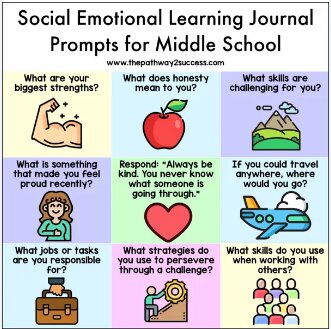
Writing Prompts for Middle School...
15th June, 2026
Study Tips for High School Students...
15th June, 2026

How to Improve Reading Skills Quickly...
15th June, 2026
Categories
Blog Posts






Breaking News
We usually sends BREAKING News to students of National Open University, NOUN. Not to miss any of our latest updates, enter your email here