Last Updated: 3rd June, 2026 | 07:55:53 PM
PTE Exams Preparation
PTE Exams Preparation: Your Comprehensive Guide

1. Understanding the PTE Academic Exam
The PTE Academic—or Pearson Test of English Academic—is a computer-based English proficiency exam for non-native speakers seeking to study or immigrate to English-speaking countries. It assesses Reading, Writing, Listening, and Speaking skills, often testing two skills simultaneously (e.g., reading and speaking) (studentarrive.com.ng). The test is now two hours long, shortened from three hours as of November 16, 2021 (studentarrive.com.ng).
2. Exam Pattern & Syllabus Breakdown
PTE Academic is divided into three core sections:
- Speaking & Writing (~54–67 minutes): includes tasks like Personal Introduction, Read Aloud, Repeat Sentence, Describe Image, Re-tell Lecture, Answer Short Question, Summarize Written Text, and Essay PTE Scores and Results FAQ
- Reading (~29–30 minutes): includes Reading & Writing: Fill in the Blanks, Multiple Choice (Single/Multiple Answer), Re-order Paragraphs, Fill in the Blanks PTE Accepted Universities in UK FAQs
- Listening (~30–43 minutes): includes Summarize Spoken Text, Multiple Choice (Single/Multiple Answer), Fill in the Blanks, Highlight Correct Summary, Select Missing Word, Highlight Incorrect Words, and Write from Dictation PTE Score Conversion to IELTS and TOEFL iBT
Scores
3. PTE Exam Preparation Tips
3.1 Top Strategies to Follow
- Plan ahead and understand what you're preparing for.
- Take lots of practice tests, build vocabulary, and know the question types.
- Keep an error log to track and learn from mistakes.
- Use trusted materials and consider taking the exam twice if needed PTE Mock Test
FAQs
3.2 Section-wise Preparation
Focus on each section separately using online videos, tutorials, and targeted practice materials PTE Home Testing
3.3 Sample Study Plan (4 Weeks)
- Build a robust schedule.
- Identify and work on weak areas.
- Revise consistently.
- Solve multiple practice test papers PTE Cut Off
3.4 Books & Resources
- Expert PTE Academic Coursebook (B1 & B2): structured course, access to MyEnglishLabs PTE Exam Books FAQs
- The Official Guide to PTE Academic: includes CD-ROM with 200+ practice tasks, sample answers, strategies How to send PTE Academic Scores to Colleges
- PTE Prep Offline Practice Test: downloadable full exam in PDF PTE Exam
Preparation Tips
- PTE Official Practice App: mobile practice, study planner, activities on the go PTE Syllabus FAQ
3.5 Online Coaching & MOOC
- PTE Online Coaching: includes MOOCs, eCourses, sample papers, and app-based materials
- MOOC by PTE: free course via Pearson’s MyLearningX platform, simulates test structure and question types with video guidance
4. Practice Tests & Scored Simulations
- PTE Scored Practice Tests: Versions A–E, each two hours long, with full score report—often delivered within an hour
- Helps you become familiar with format, time management, and identify areas for improvement
5. Registration, Slot Booking & Eligibility
- Eligibility: No strict age or educational requirements set by Pearson; open to anyone looking to prove English proficiency PTE Syllabus FAQ
- Special accommodations: Available (e.g., extra time, separate room) with documentation and advance application
- Slot booking: Requires Pearson account; exam fee in India ~INR 14,700 (inclusive). Book early—slots fill quickly during peak season
6. Sample Paper & Practice Resources
Solve PTE Sample Papers to get accustomed to exam format and question types
7. Exam Day Tips
Before the Exam
- Sleep well the night before and have a light but energizing breakfast
- Dress comfortably, arrive 30 minutes early, and bring a valid ID (passport)
At the Test Center
- Store personal items in lockers; only permitted items allowed in the exam room
- A 10-minute break is allowed during the exam
During the Exam
- Follow instructions closely, stay calm, don’t dwell too long on any question, and attempt all questions
8. Results & Scoring
- Results available online within two working days; you’ll receive an email with access instructions PTE Accepted Universities in UK FAQs
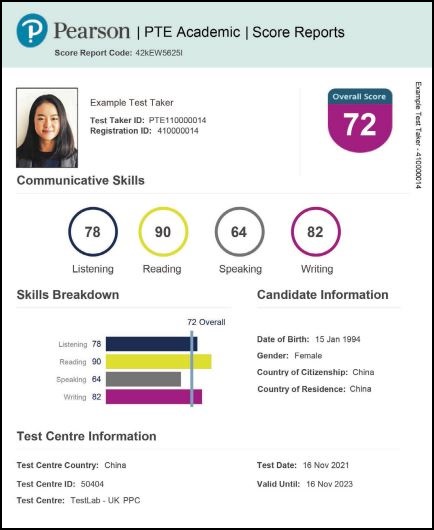
- Score range: 10–90, both overall and section-wise PTE Scores and Results FAQ
- Score chart:
- Above 85: near-native fluency, precise expression.
- 76–84: fluent with effective usage in social, academic, and professional contexts
By following this structured approach—understanding the format, practicing strategically, using quality resources, and managing exam-day logistics—you’ll be well-prepared to excel in the PTE Academic exam.
You may also
like;
PTE Scores and Results FAQ
PTE Accepted Universities in UK FAQs
Pearson Test of English Academic accepted by
New Zealand
PTE Score Conversion to IELTS and TOEFL iBT
Scores
PTE Mock Test
FAQs
PTE Home Testing
PTE Cut Off
PTE Result
PTE Exam Books FAQs
PTE Online Exams Coaching
How to send PTE Academic Scores to Colleges
PTE Eligibility for Studying Abroad
PTE Exam
Preparation Tips
PTE Syllabus FAQ
PTE Scores and Results FAQ
PTE Accepted Universities in UK FAQs
Pearson Test of English Academic accepted by New Zealand
PTE Score Conversion to IELTS and TOEFL iBT Scores
PTE Mock Test FAQs
PTE Home Testing
PTE Cut Off
PTE Result
PTE Exam Books FAQs
PTE Online Exams Coaching
How to send PTE Academic Scores to Colleges
PTE Eligibility for Studying Abroad
PTE Exam Preparation Tips
PTE Syllabus FAQ
Mastering the PTE: Your Ultimate Preparation FAQ Guide
Preparing for the Pearson Test of English (PTE) Academic can feel like a daunting task, but success often boils down to understanding the test format, mastering time management, and employing the right strategies. Whether you are aiming for a migration visa, university admission, or professional certification, this guide addresses the most frequently asked questions to help you streamline your study plan.
The Basics: Format and Scoring
What is the structure of the PTE Academic?
The PTE Academic is a computer-based English language proficiency test. It evaluates four communicative skills—Speaking, Writing, Reading, and Listening—across three main sections:
Part 1: Speaking and Writing (54–67 minutes)
Part 2: Reading (29–30 minutes)
Part 3: Listening (30–43 minutes)
How is the PTE scored?
The test is scored by an automated AI system, which removes human subjectivity. Your score is reported on the Global Scale of English (GSE), a range from 10 to 90. You will receive an overall score plus individual scores for each of the four communicative skills, as well as enabling skills (grammar, oral fluency, pronunciation, spelling, vocabulary, and written discourse).
Preparation Strategies
How much time do I need to prepare?
Preparation time varies significantly based on your current English proficiency.
For those with a solid foundation: 2–4 weeks of intensive practice (1–2 hours daily) is often sufficient.
For those needing significant improvement: 8–12 weeks may be required. The key is to take a scored practice test at the start to establish your baseline score and identify specific areas that need improvement.
Which resources are the most effective?
Official PTE Practice Materials: Always start here. Pearson offers scored practice tests that simulate the real test environment, which is vital for familiarizing yourself with the computer-based interface.
PTE Academic Question Bank: Utilize reputable online platforms that provide practice questions for every task type.
Speaking Tools: Record yourself answering questions and listen back to identify issues with pronunciation or hesitation.
Frequently Asked Questions
Are there "templates" for the Speaking and Writing sections?
Yes, templates are highly effective for tasks like Describe Image, Retell Lecture, and the Essay section. They provide a structural scaffold, allowing you to focus on content, fluency, and pronunciation rather than struggling to organize your thoughts under pressure. Pro Tip: Use templates, but practice them enough so they sound natural and fluent, not robotic.
How important is the microphone setup?
Since the test uses AI scoring, your microphone position is critical.
Place the microphone just to the side of your mouth to avoid "popping" sounds from your breath (plosives).
Test the equipment thoroughly before the actual test begins.
Can I correct a typo in the Writing section?
The PTE is computer-based, so you can edit your work using standard keyboard shortcuts (Backspace, Delete, Cut, Copy, Paste). However, because of the time constraints, it is better to practice touch-typing or build enough speed to minimize the need for extensive editing.
Does the accent affect my score?
The PTE’s AI is trained on a vast array of global accents. It is designed to understand non-native speakers. The focus should be on clarity, pace, and intonation rather than trying to mimic a specific native-speaker accent.
Test Day Success Tips
Focus on Fluency: In the Speaking section, the AI values oral fluency—maintaining a steady pace without long, unnatural pauses—as much as, or sometimes more than, perfect pronunciation.
Manage Time Wisely: Many sections have a "timer" for each task, but some sections (like Reading) have an overall timer. Keep a constant eye on the clock.
Check Your Hardware: During the initial setup at the test center, verify that your keyboard and headset are functioning perfectly. If they aren't, speak up immediately before the test starts.
Read the Instructions: Every task has specific instructions. Even if you have practiced thousands of questions, read the instructions on the screen to ensure there isn't a minor variation in the prompt.
Related Post
Related Posts

PTE Scored Practice Tests...
3rd June, 2026
PTE Syllabus FAQ...
3rd June, 2026
PTE Exam Preparation Tips...
3rd June, 2026
PTE Mock Test FAQs...
3rd June, 2026
PTE Eligibility for Studying Abroad...
3rd June, 2026
How to send PTE Academic Scores to Colleges...
3rd June, 2026
PTE Online Exams Coaching...
3rd June, 2026
PTE Scores and Results FAQ...
3rd June, 2026
PTE Result...
3rd June, 2026
PTE Exam Books FAQs...
3rd June, 2026
PTE Cut Off...
3rd June, 2026
PTE Home Testing...
3rd June, 2026
Categories
Blog Posts






Breaking News
We usually sends BREAKING News to students of National Open University, NOUN. Not to miss any of our latest updates, enter your email here